What Is Metabolic Syndrome and Why It Matters
Do you have metabolic syndrome? Even if you’ve never heard the term, it’s possible that you may be experiencing it — in fact, there’s a significant chance. According to the National Heart, Lung, and Blood Institute (2022), “metabolic syndrome is common in the United States. About 1 in 3 adults have metabolic syndrome.”
Unfortunately, in addition to one in three adults, a growing number of children are also affected by this health-impacting condition.
Defining Metabolic Syndrome
Metabolic syndrome has been recognized for decades, though its definition has evolved. In 2009, several major health organizations — including the American Heart Association and the National Heart, Lung, and Blood Institute — collaborated to create a unified definition of metabolic syndrome (MetS). This remains the clinical standard used today (Alberti et al., 2009).
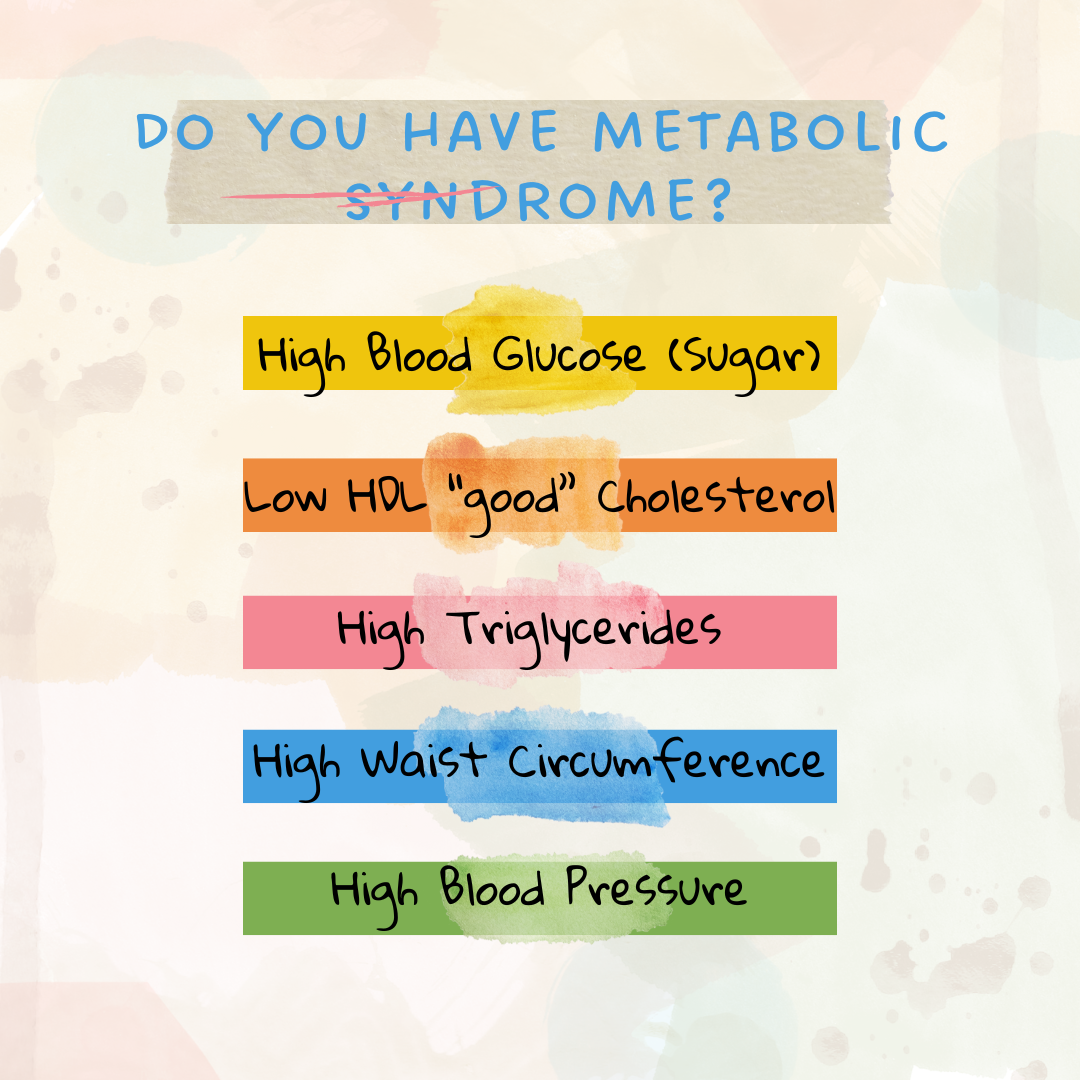
According to these guidelines, metabolic syndrome can be diagnosed when an individual has three or more of the following conditions (Alberti et al., 2009):
High blood glucose (blood sugar)
Low HDL (“good”) cholesterol
High triglyceride levels
Large waist circumference
High blood pressure
Why Metabolic Syndrome Is a Public Health Concern
Metabolic syndrome is a serious health issue in both adults and children. Its importance lies not only in its direct impact but also in its strong connection to other chronic diseases — particularly heart disease and type 2 diabetes (Alberti et al., 2009).
Given its growing prevalence, metabolic syndrome is now considered a major public health concern. To reverse this trend, we would need to see clear evidence that rates are declining across the population. Despite ongoing research, awareness campaigns, and preventive health efforts, a large-scale solution remains elusive. Still, continued education, early detection, and lifestyle support are critical for improving outcomes.
References
Alberti, K. G. M. M., Eckel, R. H., Grundy, S. M., Zimmet, P. Z., Cleeman, J. I., Donato, K. A., Fruchart, J.-C., James, W. P. T., Loria, C. M., & Smith, S. C., Jr. (2009). Harmonizing the metabolic syndrome: A joint interim statement of the International Diabetes Federation Task Force on Epidemiology and Prevention; National Heart, Lung, and Blood Institute; American Heart Association; World Heart Federation; International Atherosclerosis Society; and International Association for the Study of Obesity. Circulation, 120(16), 1640–1645. https://doi.org/10.1161/CIRCULATIONAHA.109.192644
National Heart, Lung, and Blood Institute. (2022, May 18). What is metabolic syndrome? U.S. Department of Health and Human Services. https://www.nhlbi.nih.gov/health/metabolic-syndrome
