Let’s do Zone 2
Zone 2 Exercise and Metabolic Health
Zone 2 exercise has received growing attention for its potential benefits to metabolic health, and I’m a huge fan. Personally, it’s easier for me to commit to a Zone-2-ish brisk walk than a more vigorous workout like running. In Nature Wants Us to Be Fat, Dr. Richard J. Johnson (2022) recommends endurance-type exercise in Zone 2—about one hour, three or four times per week—to support mitochondrial health. The goal, as described in the book, is to keep exercise intensity around 70% of maximum heart rate, below the threshold where lactate begins to accumulate.
What Is Zone 2 Training?
Practically speaking, Zone 2 corresponds to roughly 60–70% of your maximum heart rate, often called a “conversational pace” (American College of Sports Medicine [ACSM], as cited in Elder, 2023; Cleveland Clinic, 2025). At this level, you should be able to maintain conversation but not sing.
There is some question, however, about whether this intensity is vigorous enough. Recent research indicates that while Zone 2 training is beneficial, it may not be uniquely optimal for mitochondrial or cardiorespiratory adaptations; higher-intensity intervals can sometimes yield greater benefits in less time (Storoschuk et al., 2025). Still, for many people, the accessibility and sustainability of Zone 2 activity make it a practical cornerstone of long-term metabolic health.
Physical Activity Guidelines for Americans
According to the Physical Activity Guidelines for Americans (U.S. Department of Health and Human Services [HHS], 2018), adults should engage in 150–300 minutes of moderate-intensity aerobic activity per week, or an equivalent combination of moderate and vigorous exercise, to achieve substantial health benefits and lower the risk of chronic disease.
Moderate-intensity activity is defined as 3.0–5.9 METs on an absolute scale or about a 5–6 on a 0–10 perceived-exertion scale. In practical terms, this is an effort level where a person can talk but not sing.
HHS also created the Move Your Way campaign to help Americans apply these guidelines in daily life.
The “Active Couch Potato” Problem
Even when people meet weekly exercise recommendations, too much sitting can diminish the benefits. The term “active couch potato” describes individuals who exercise regularly yet spend most of their day sedentary (Owen et al., 2010; Dunstan et al., 2012).
Prolonged sitting—eight or more hours daily—has been linked to impaired glucose regulation and lipid metabolism, independent of structured exercise. I relate to this personally: during years of doing vigorous HIIT workouts, I’d often spend hours afterward sitting at my desk.
To counter these effects, research suggests adding short movement breaks throughout the day—standing, stretching, or walking for a couple of minutes every 30–60 minutes—to improve metabolic flexibility and reduce sedentary time.
Balancing Strength and Aerobic Training
The key takeaway: we need to move, and likely more than most of us do. Regular movement supports health and helps prevent metabolic dysfunction, but it’s not just about weight loss.
A growing social media narrative claims that strength training is more important than aerobic exercise. In truth, both are essential. Strength training builds muscle mass and metabolic resilience, while aerobic exercise supports cardiovascular and mitochondrial health.
The best approach is to create realistic, individual activity goals that can be maintained over time.
Measuring Activity: Understanding METs
If you’re looking for ways to assess or diversify your physical activity, the Compendium of Physical Activities from Arizona State University’s Healthy Lifestyles Research Center is a valuable tool. It lists hundreds of activities with their corresponding MET values—from sleeping (0.9 METs) to intense running (18 METs).
MET stands for Metabolic Equivalent of Task and represents the energy cost of physical activity relative to resting.
1 MET = energy expenditure while sitting quietly, roughly equal to consuming 3.5 mL of oxygen per kilogram per minute, or about 1 kcal/kg/hour.
Examples:
Light activity: < 3 METs (slow walking, light chores)
Moderate activity: 3–5.9 METs (brisk walking, gardening)
Vigorous activity: ≥ 6 METs (running, fast cycling)
The Compendium allows users to browse activities by type—household, recreational, or occupational—and compare MET values to national guidelines for a more informed fitness strategy.
Final Thoughts
Zone 2 exercise offers an accessible, sustainable way to support metabolic and mitochondrial health, especially when combined with other forms of movement and reduced sedentary time. Ultimately, consistency matters most: find the balance of aerobic and strength activities that fits your life, and keep moving regularly for long-term wellness.
Disclaimer
This content is for general educational purposes and should not replace individualized medical or exercise advice. Always consult a qualified healthcare professional before starting a new fitness or training program.
References
Johnson, R. J. (2022). Nature wants us to be fat: The surprising science behind why we gain weight and how we can prevent—and reverse—it. BenBella Books. (See exercise recommendation: sustained ≥1 hour, 3–4×/week.)
Storoschuk, K. L., Moran-MacDonald, A., Gibala, M. J., & Gurd, B. J. (2025). Much ado about Zone 2: A narrative review assessing the efficacy of Zone 2 training for improving mitochondrial capacity and cardiorespiratory fitness in the general population. Sports Medicine, 55(7), 1611–1624. https://doi.org/10.1007/s40279-025-02261-y PubMed
Cleveland Clinic. (2025). Exercise heart rate zones explained (Zone 2 ≈ 60–70% HRmax). Cleveland Clinic
American College of Sports Medicine (via Elder, 2023). Moderate intensity ≈ 64–76% HRmax. Technologies, 11(3), 66.
U.S. Department of Health and Human Services. (2018). Physical Activity Guidelines for Americans (2nd ed.). U.S. Department of Health and Human Services. https://health.gov/paguidelines
Dunstan, D. W., Howard, B., Healy, G. N., & Owen, N. (2012). Too much sitting—a health hazard. Diabetes Research and Clinical Practice, 97(3), 368–376. https://doi.org/10.1016/j.diabres.2012.05.020
Owen, N., Healy, G. N., Matthews, C. E., & Dunstan, D. W. (2010). Too much sitting: The population-health science of sedentary behavior. Exercise and Sport Sciences Reviews, 38(3), 105–113. https://doi.org/10.1097/JES.0b013e3181e373a2
U.S. Department of Health and Human Services. (n.d.). Move Your Way. https://health.gov/MoveYourWay/
Ainsworth, B. E., Herrmann, S. D., Jacobs Jr., D. R., Whitt-Glover, M. C., Tudor-Locke, C., & Barreira, T. V. (2024). The Compendium of Physical Activities (Adult, Older Adult & Wheelchair versions). Arizona State University Healthy Lifestyles Research Center. https://pacompendium.com/
Ainsworth, B. E., Haskell, W. L., Herrmann, S. D., Meckes, N., Bassett, D. R., Tudor-Locke, C., ... & Leon, A. S. (2011). 2011 Compendium of Physical Activities: A second update of codes and MET values. Medicine & Science in Sports & Exercise, 43(8), 1575–1581. https://doi.org/10.1249/MSS.0b013e31821ece12
.
OWN Your Health Foundation
OWN your health foundation
If you are looking to improve your metabolic health, make sure you OWN the basics first. It is so easy to go down the social media rabbit You may ultimately find your answer right here 🎯 in the 3 most important things we all know we need for good health.
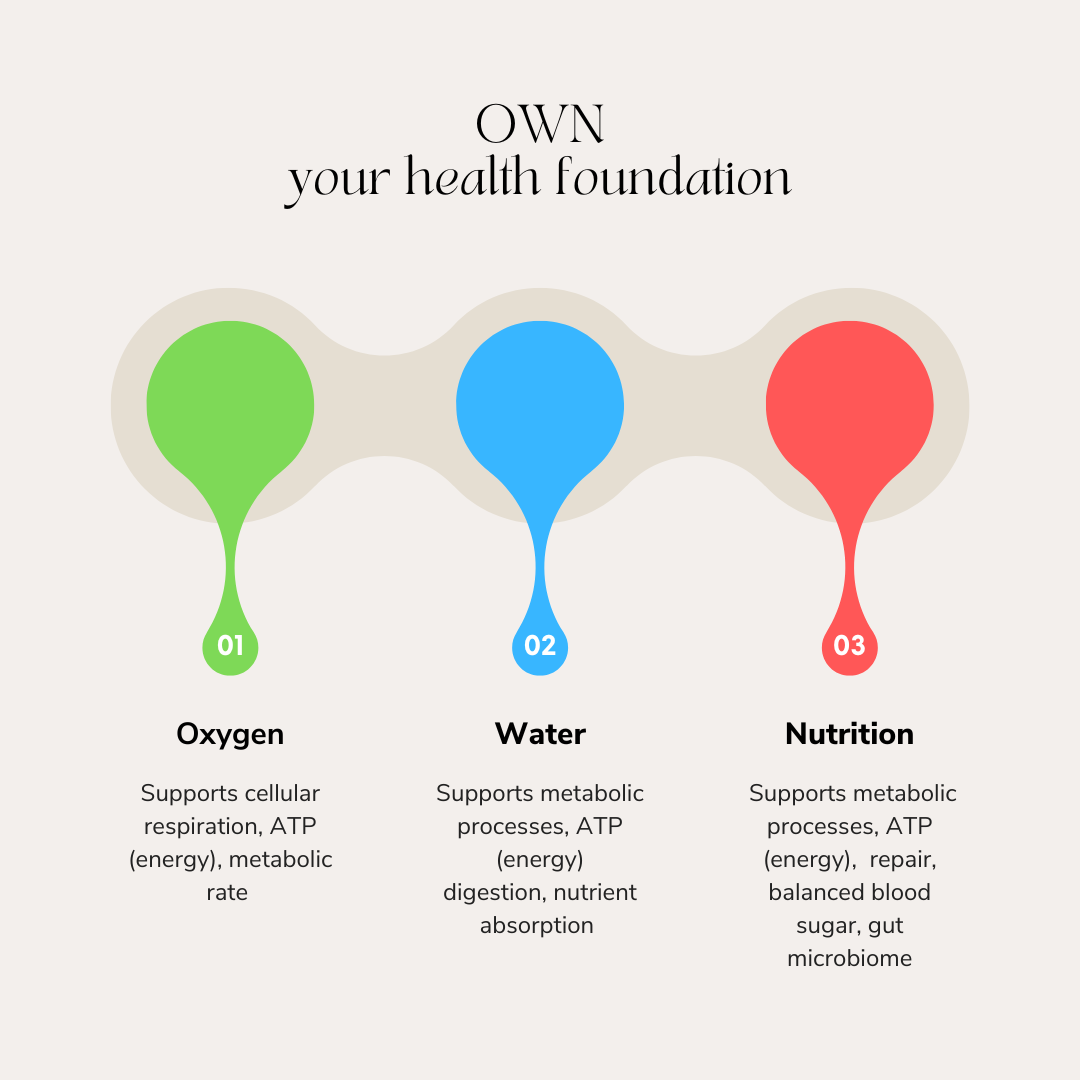
Oxygen 🌱 Water 💧 Nutrition 🥗
We all know these are essential for life—but are you sure your foundation is solid?
A large portion of U.S. adults are chronically dehydrated, and many people unknowingly fall short on key nutrients in their diet. Add to that the body’s ability to deliver and use oxygen efficiently—a cornerstone of metabolic health.
There’s a mountain 📚 of research linking hydration, nutrition, and oxygen utilization (through physical activity and cardiorespiratory fitness) to better metabolic outcomes.
Lately, conversations about hormones—especially cortisol—are everywhere on social media. If you’re concerned about cortisol, it’s worth looking at the basics first: problems with hydration, nutrition, or oxygen use can all raise cortisol levels.
Sometimes the right answer really is the simple one! 💪
Credit: 📖 Inspired by the principle of Occam’s Razor and the wisdom of Albert Einstein:
“Everything should be made as simple as possible, but no simpler.”
Four Factors linked to Metabolic Dysfunction
4 factors linked to metabolic dysfunction
When searching for information on improving metabolic function, the solutions are elusive at best and impossible at worst. The information shared online and through social media is often too generic to be helpful—such as “Eat less, move more”—too specific—like “Eat almonds to reduce belly fat”—or even contradictory and potentially damaging. Even books authored by doctors and scientists offer conflicting advice on what actions to take.
It is encouraging that there is a substantial level of attention on the topic of metabolic issues, and scientific and medical research are clearly progressing. However, there does not yet seem to be a clear-cut answer as to why millions of U.S. adults and children are dealing with metabolic syndrome. Hopefully, in time, the causes will become much more clear.
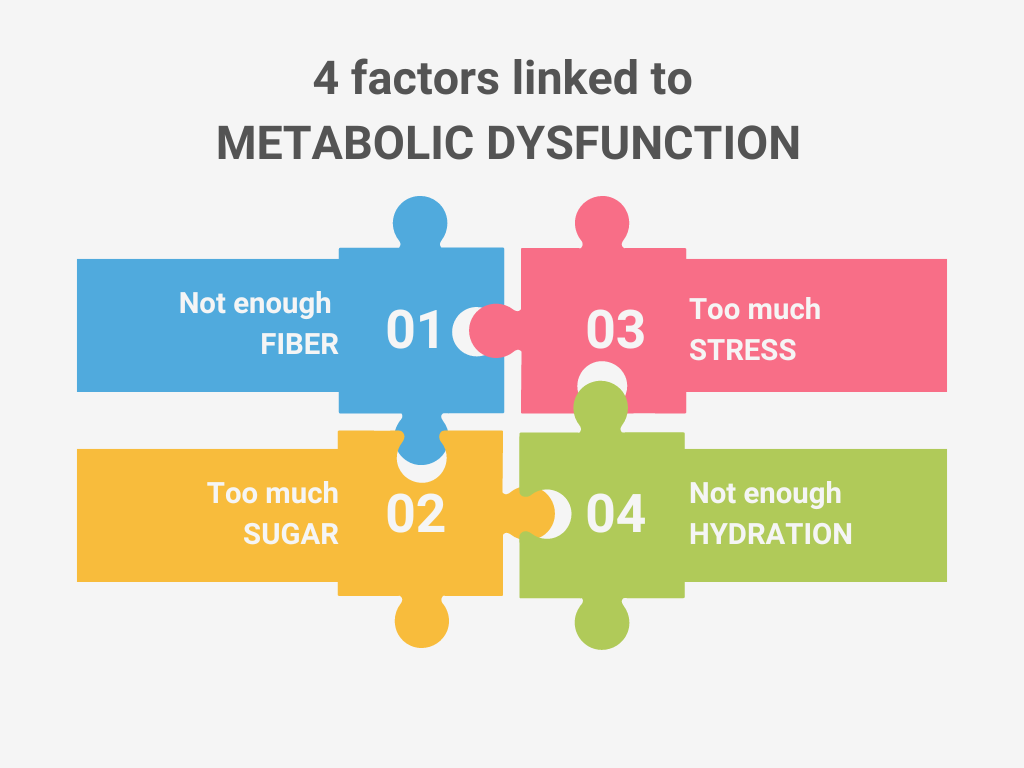
In the meantime, there are common themes in published scientific and medical research that may offer helpful insights. In my reading and research, four factors are most frequently associated with metabolic dysfunction:
1. Not Enough Fiber
Getting enough fiber is associated with reduced metabolic disease risk factors (Quagliani & Felt-Gunderson, 2016). According to the Dietary Guidelines for Americans, 2020–2025 (U.S. Department of Agriculture & U.S. Department of Health and Human Services, 2020), over 90% of adults do not meet the recommended daily intake of fiber. Nutritional goals vary from 25 to 31 grams a day for adults.
Processed carbohydrates—like crackers and chips—are often stripped of their natural fiber content. Choosing more whole foods, fruits, vegetables, and legumes can help close that gap.
2. Too Much Added Sugar
The Dietary Guidelines for Americans, 2020–2025 also report that a majority of Americans exceed the recommended limits for added sugar (U.S. Department of Agriculture & U.S. Department of Health and Human Services, 2020).
We all recognize when we’re indulging in obvious sources of sugar, like cupcakes or donuts. However, added sugars also hide in many foods—such as salad dressing, bread, juice, or pasta sauce. Common types of added sugars are listed on the Centers for Disease Control and Prevention (CDC) website.
Fortunately, food labels now make it easier to identify added sugar. Since 2021, manufacturers have been required to include “Added Sugars” on nutrition labels (Magnuson & Chan, 2019). For example, GoGo SqueeZ applesauce lists 13 g total sugars and 0 g added sugars—indicating that no sugar was added during processing.
3. Too Much Stress
Stress has been linked to obesity and metabolic dysfunction (Tomiyama, 2019). The stress may be physiological, psychological, or physical. For anyone struggling with metabolic issues, it’s worth identifying sources of stress that can be reduced or eliminated. Some stressors are obvious, while others may be subtle and chronic.
4. Not Enough Hydration
We’ve all heard the advice to “drink more water,” and research supports it. Inadequate hydration has been associated with higher body mass index (BMI) and obesity (Chang et al., 2016).
The amount of water an individual needs depends on factors such as climate, activity level, and body size. The Mayo Clinic recommends approximately 2.7 liters daily for women and 3.7 liters for men.
References
Chang, T., Ravi, N., Plegue, M. A., Sonneville, K. R., & Davis, M. M. (2016). Inadequate hydration, BMI, and obesity among US adults: NHANES 2009–2012. Annals of Family Medicine, 14(4), 320–324. https://doi.org/10.1370/afm.1951
Magnuson, E. A., & Chan, P. S. (2019). Added sugar labeling. Circulation, 139(23), 2625–2627. https://doi.org/10.1161/CIRCULATIONAHA.119.040325
Quagliani, D., & Felt-Gunderson, P. (2016). Closing America’s fiber intake gap: Communication strategies from a food and fiber summit. American Journal of Lifestyle Medicine, 11(1), 80–85. https://doi.org/10.1177/1559827615588079
Tomiyama, A. J. (2019). Stress and obesity. Annual Review of Psychology, 70, 703–718. https://doi.org/10.1146/annurev-psych-010418-102936
U.S. Department of Agriculture, & U.S. Department of Health and Human Services. (2020). Dietary guidelines for Americans, 2020–2025 (9th ed.). https://www.dietaryguidelines.gov
Mayo Clinic Staff. (2022, October 12). Water: How much should you drink every day? Mayo Clinic. https://www.mayoclinic.org/healthy-lifestyle/nutrition-and-healthy-eating/in-depth/water/art-20044256
Centers for Disease Control and Prevention. (2024, January 5). Get the facts: Added sugars. https://www.cdc.gov/nutrition/php/data-research/added-sugars.html
Metabolic Syndrome - America’s Public Health Crisis
What Is Metabolic Syndrome and Why It Matters
Do you have metabolic syndrome? Even if you’ve never heard the term, it’s possible that you may be experiencing it — in fact, there’s a significant chance. According to the National Heart, Lung, and Blood Institute (2022), “metabolic syndrome is common in the United States. About 1 in 3 adults have metabolic syndrome.”
Unfortunately, in addition to one in three adults, a growing number of children are also affected by this health-impacting condition.
Defining Metabolic Syndrome
Metabolic syndrome has been recognized for decades, though its definition has evolved. In 2009, several major health organizations — including the American Heart Association and the National Heart, Lung, and Blood Institute — collaborated to create a unified definition of metabolic syndrome (MetS). This remains the clinical standard used today (Alberti et al., 2009).
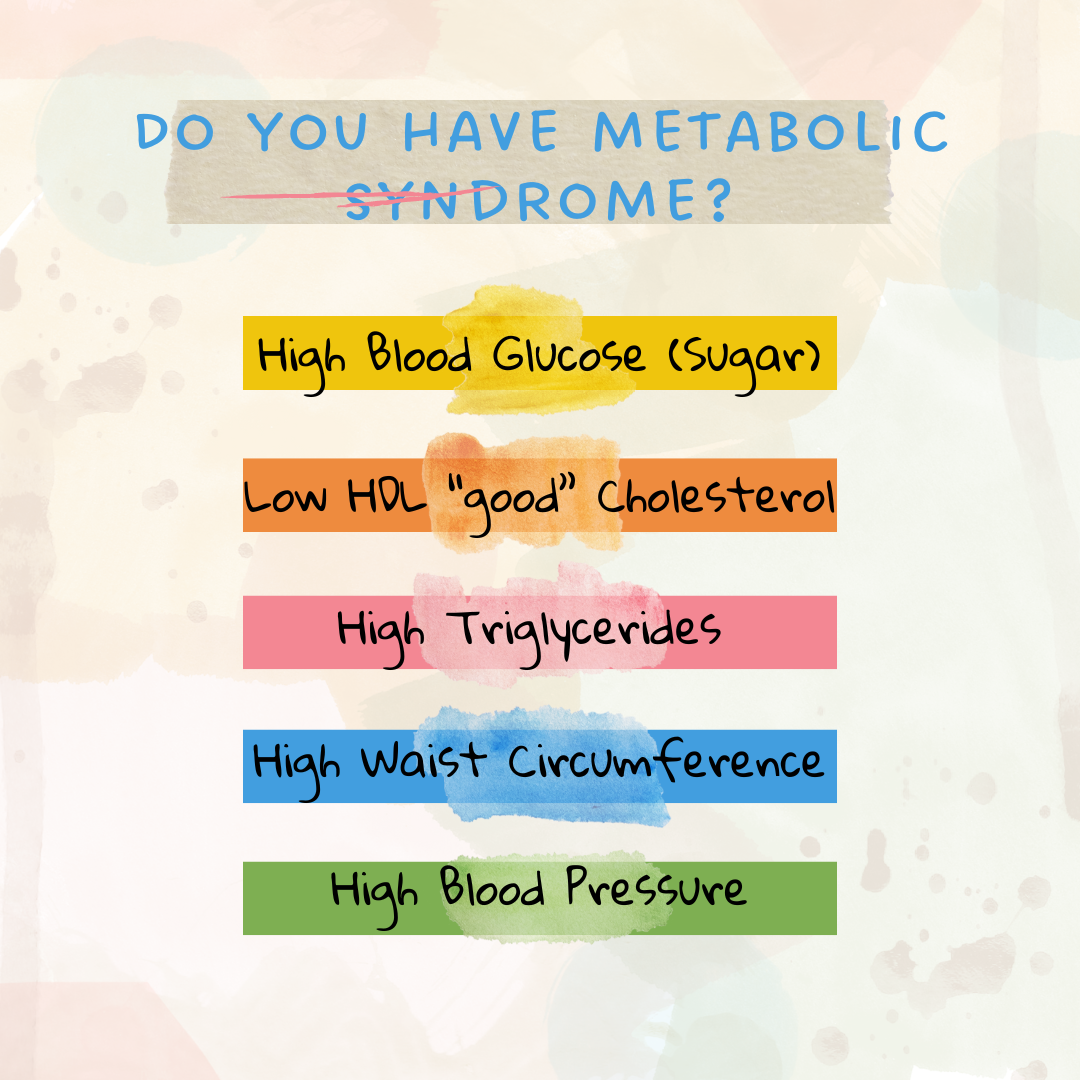
According to these guidelines, metabolic syndrome can be diagnosed when an individual has three or more of the following conditions (Alberti et al., 2009):
High blood glucose (blood sugar)
Low HDL (“good”) cholesterol
High triglyceride levels
Large waist circumference
High blood pressure
Why Metabolic Syndrome Is a Public Health Concern
Metabolic syndrome is a serious health issue in both adults and children. Its importance lies not only in its direct impact but also in its strong connection to other chronic diseases — particularly heart disease and type 2 diabetes (Alberti et al., 2009).
Given its growing prevalence, metabolic syndrome is now considered a major public health concern. To reverse this trend, we would need to see clear evidence that rates are declining across the population. Despite ongoing research, awareness campaigns, and preventive health efforts, a large-scale solution remains elusive. Still, continued education, early detection, and lifestyle support are critical for improving outcomes.
References
Alberti, K. G. M. M., Eckel, R. H., Grundy, S. M., Zimmet, P. Z., Cleeman, J. I., Donato, K. A., Fruchart, J.-C., James, W. P. T., Loria, C. M., & Smith, S. C., Jr. (2009). Harmonizing the metabolic syndrome: A joint interim statement of the International Diabetes Federation Task Force on Epidemiology and Prevention; National Heart, Lung, and Blood Institute; American Heart Association; World Heart Federation; International Atherosclerosis Society; and International Association for the Study of Obesity. Circulation, 120(16), 1640–1645. https://doi.org/10.1161/CIRCULATIONAHA.109.192644
National Heart, Lung, and Blood Institute. (2022, May 18). What is metabolic syndrome? U.S. Department of Health and Human Services. https://www.nhlbi.nih.gov/health/metabolic-syndrome